St Martin's Church, Fifield Bavant
Services
- There is an evensong service held at 3pm every 2nd Sunday of the month, except November as it falls on Remembrance Day
- We have occasional special services, Sung Compline, quiet contemplative Compline, please keep an eye out in the local news and on the website
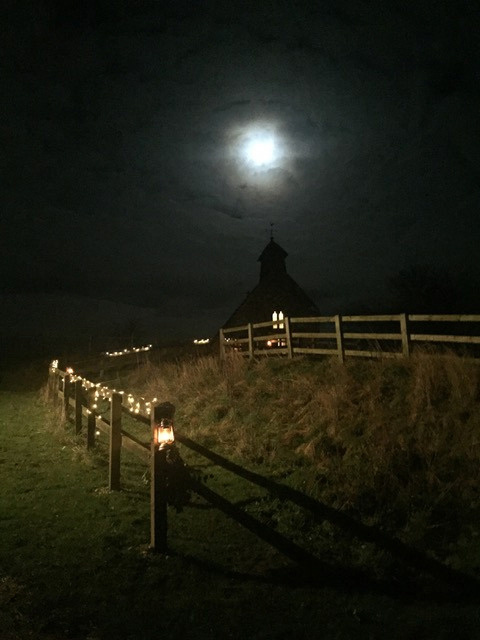
- We hold a very popular 'Midnight' 10pm Christmas Eve Service and are always welcoming weddings and baptisms
History
The church of St Martin was so called in 1496, and may have been so from, or before, the grant of a Martinmas fair at Fifield in 1267.
St Martin's is a Grade II* listed building dated by Pevsner to the 13th Century, and a good proportion of it is still original to that period but there are 15th Century and 17th Century features.
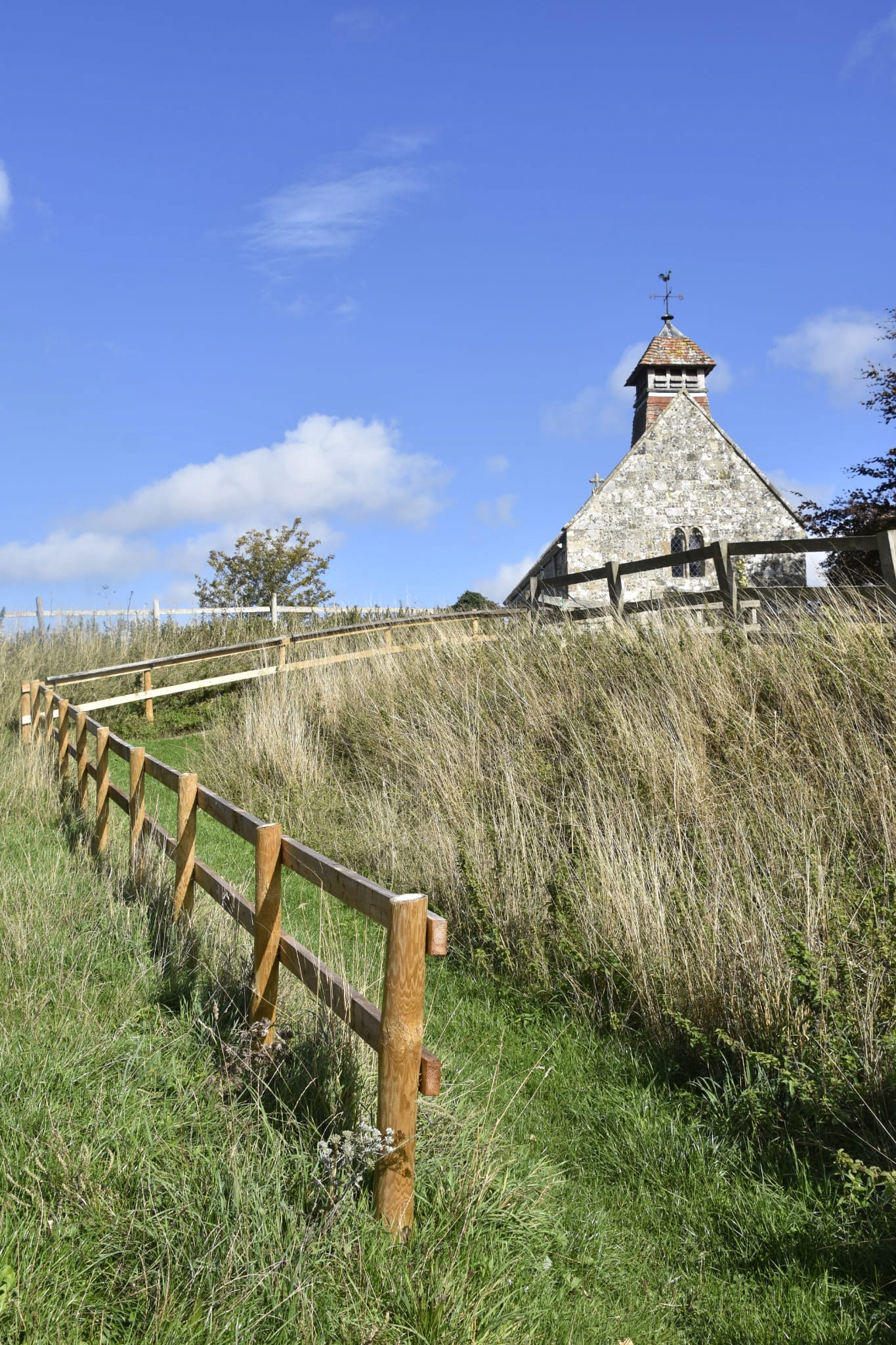
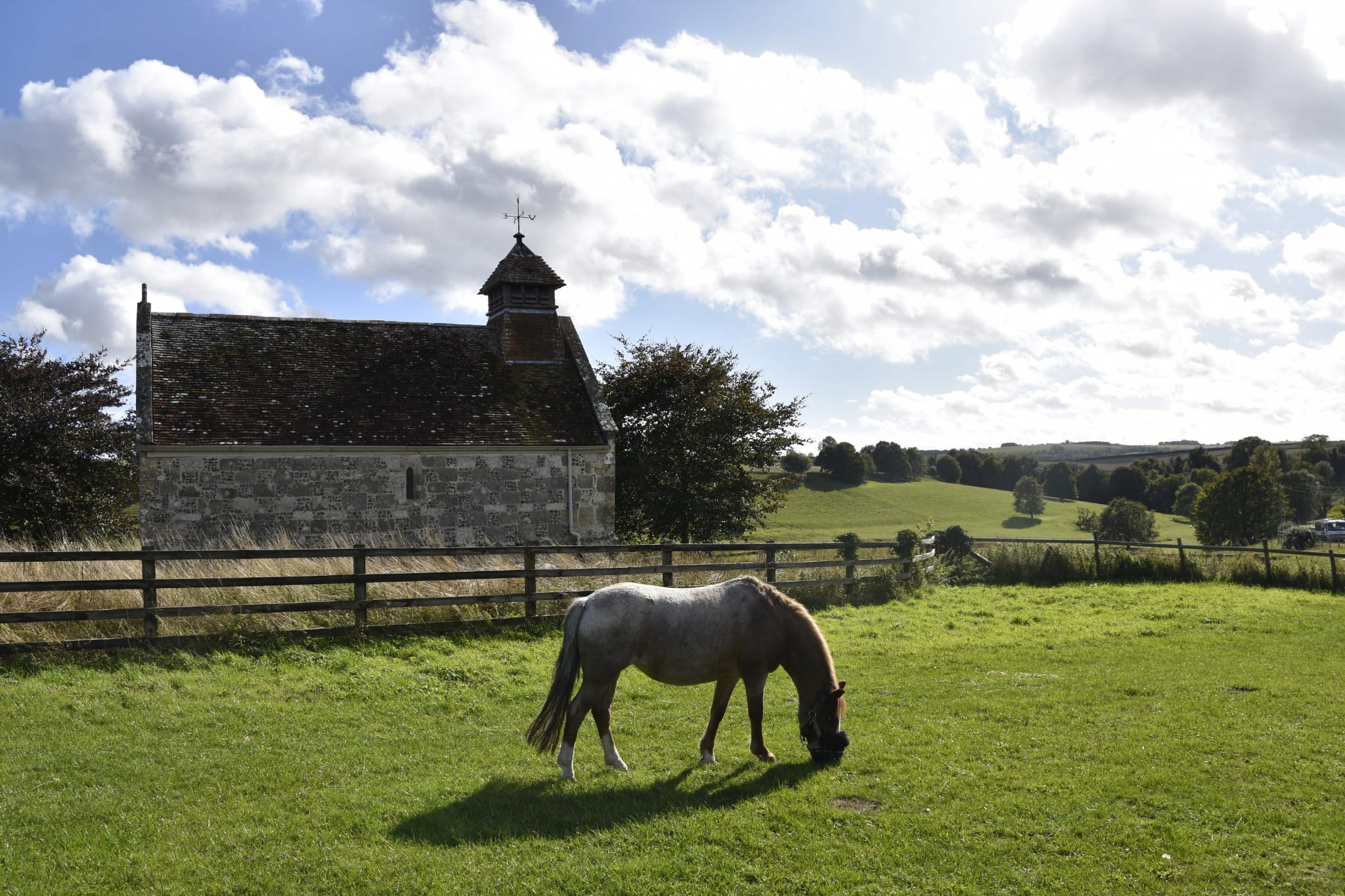
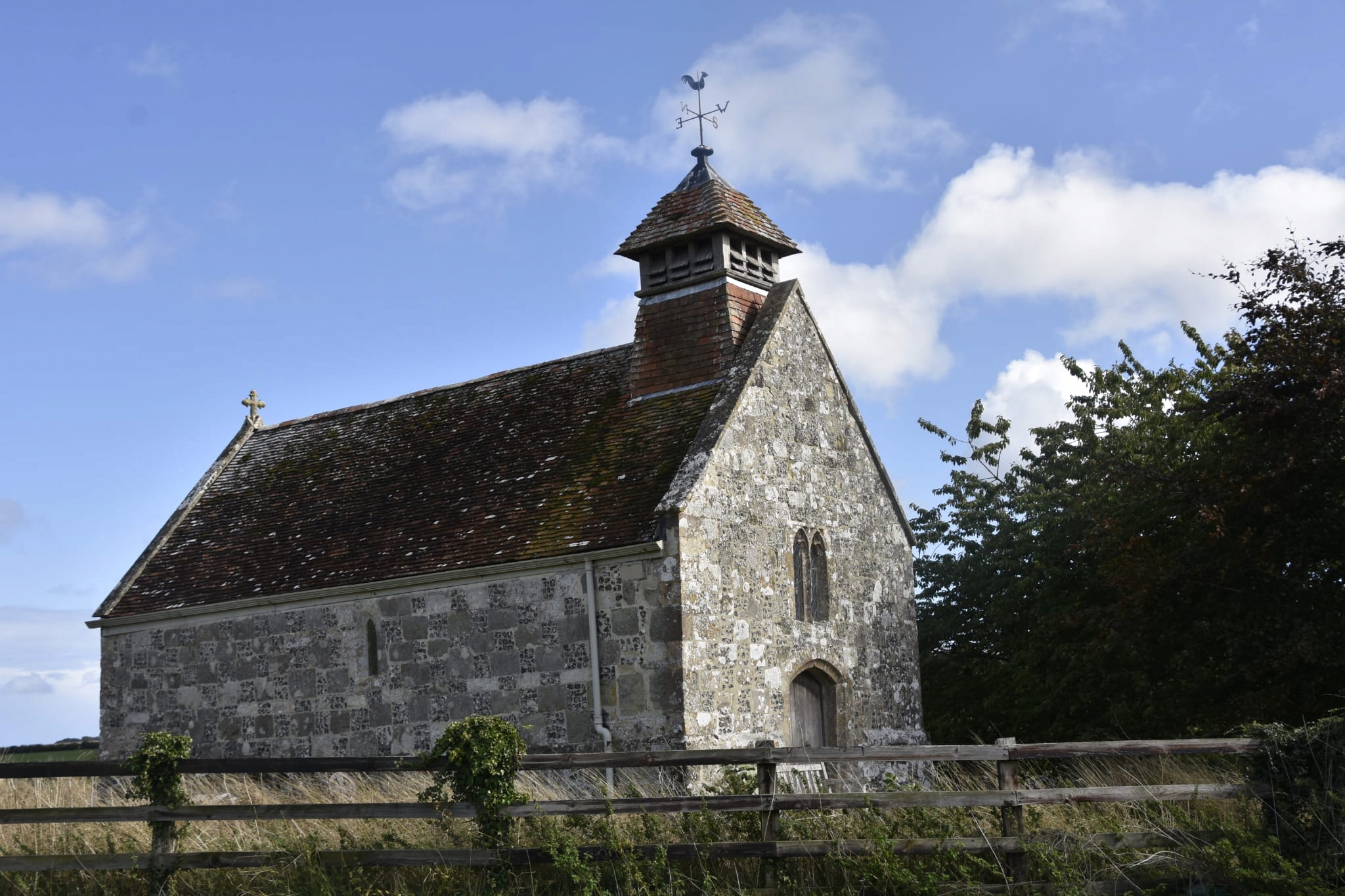
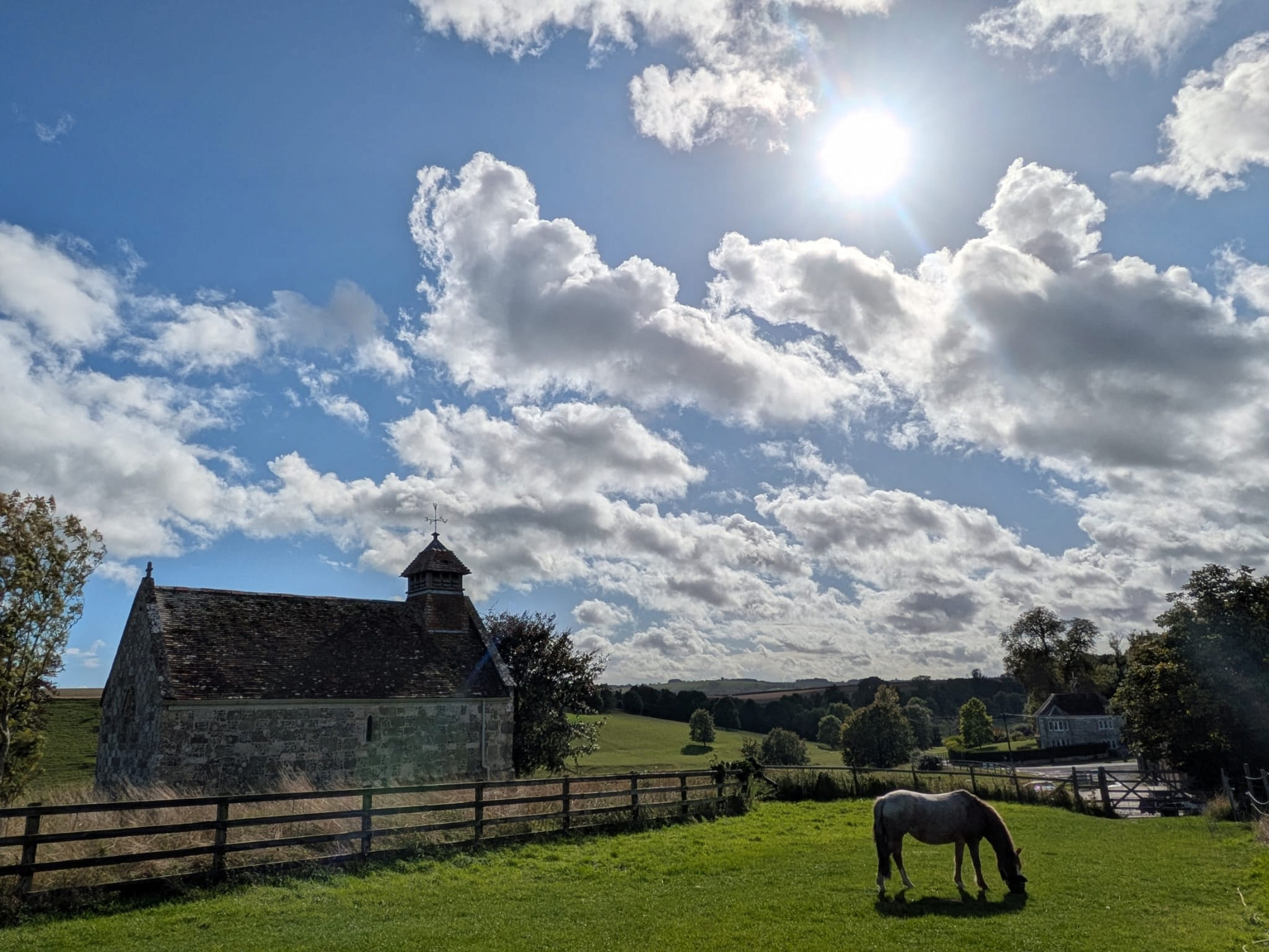
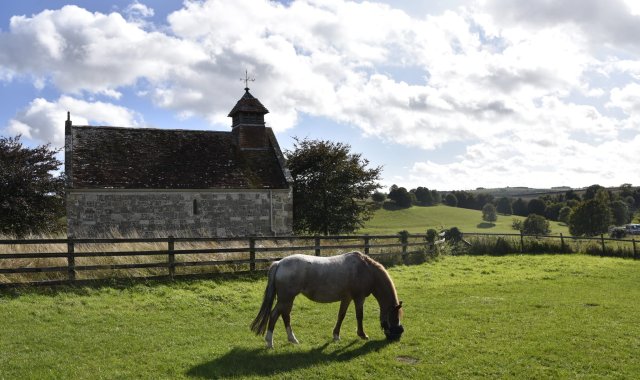
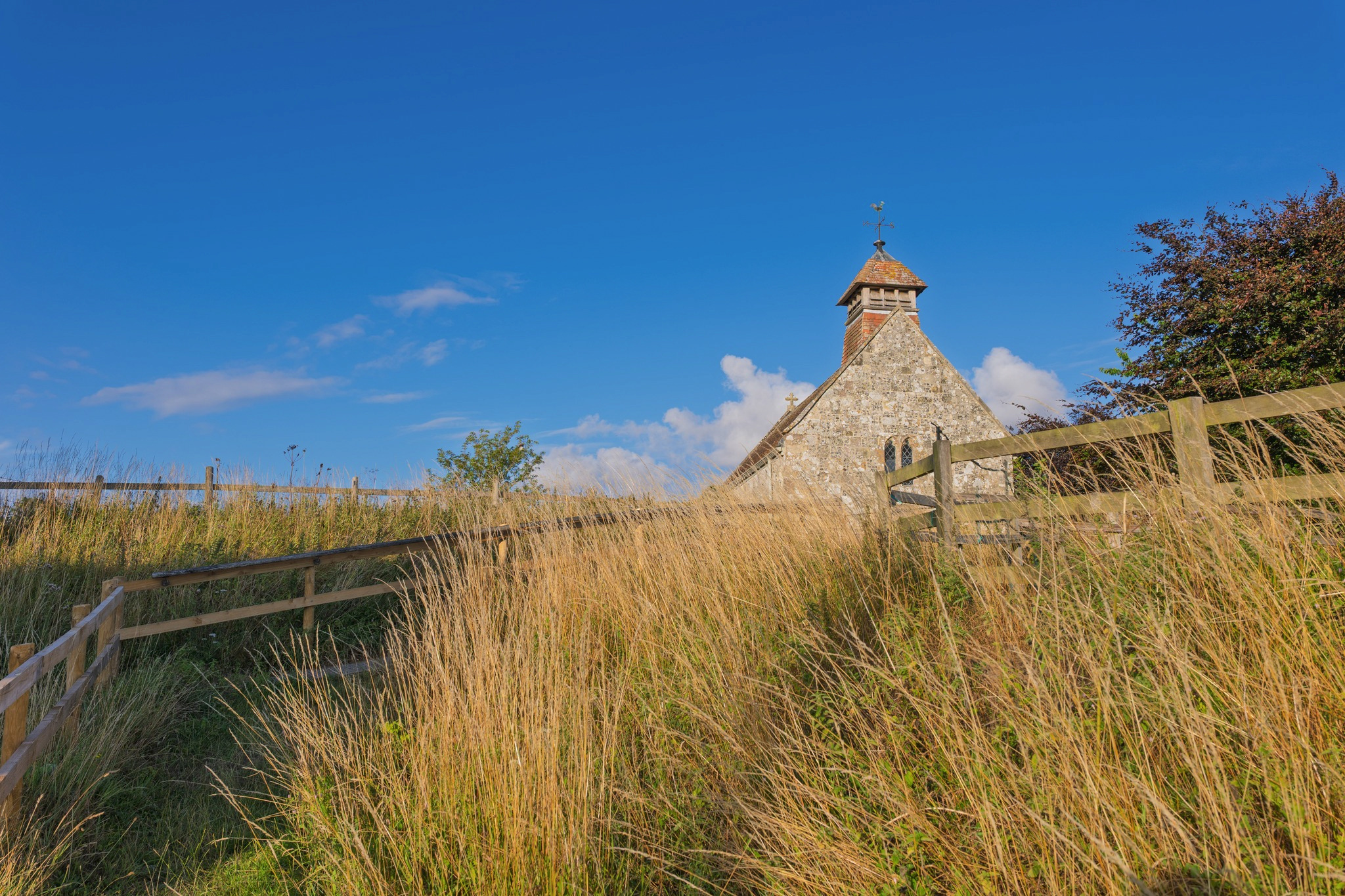
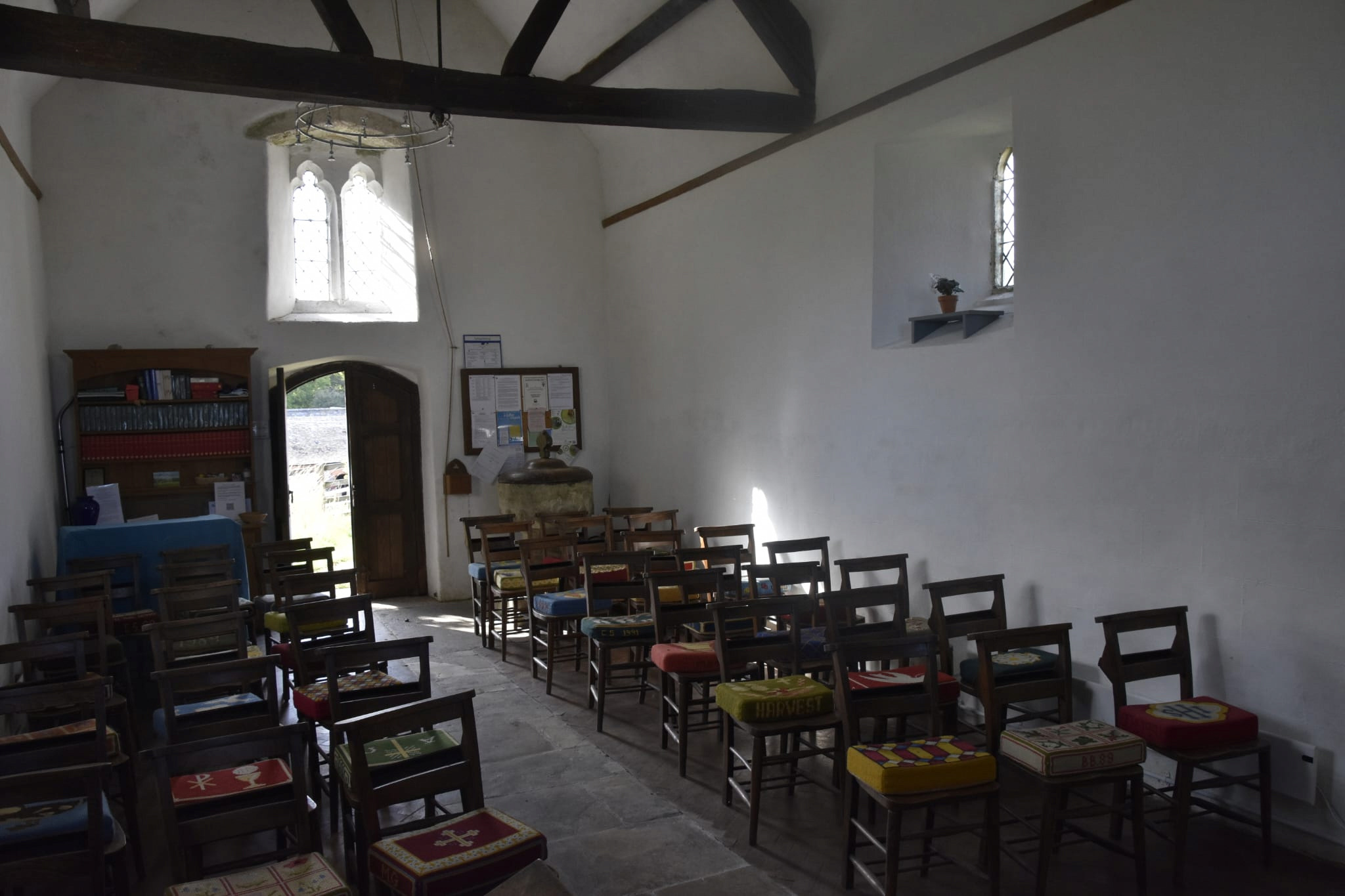
This small, 12th century, stone and flint-built church with its bell tower rising from the red-tiled roof is set on the hillside within the boundaries of Manor Farm. The church, dedicated to St Martin, is reputed to be the smallest church in regular use in England, measuring 35 x 14 feet.
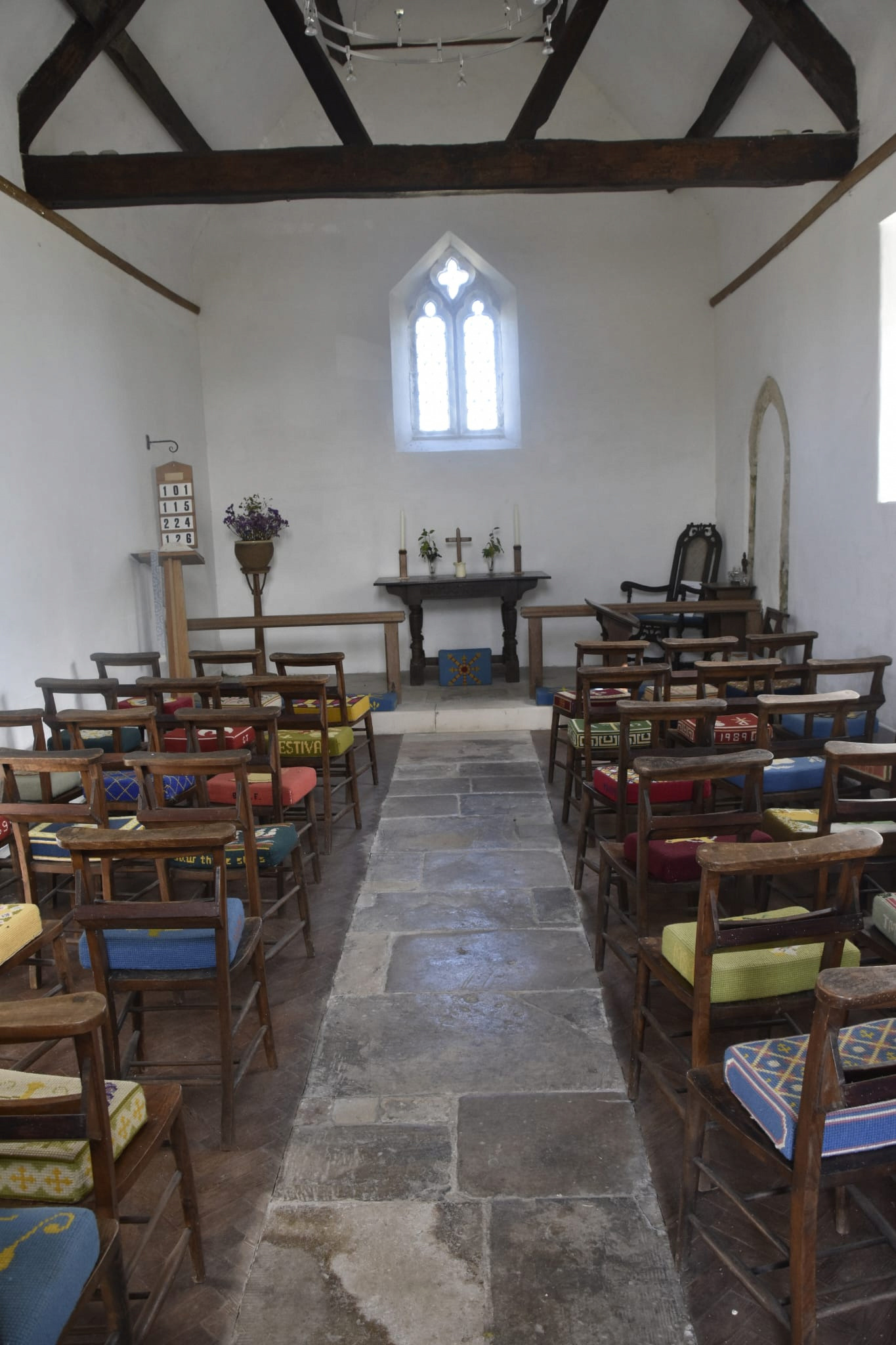
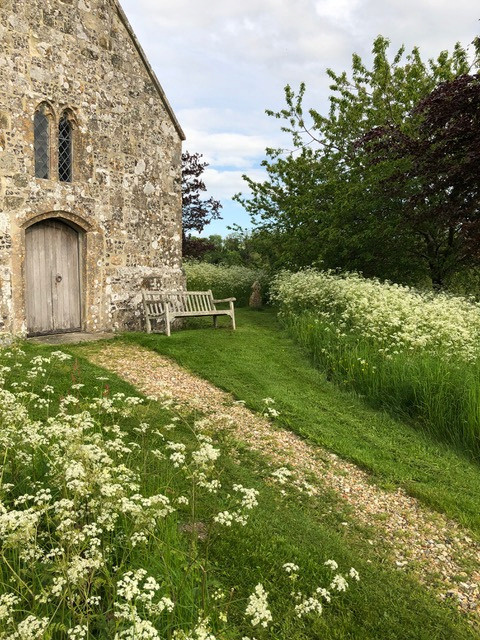
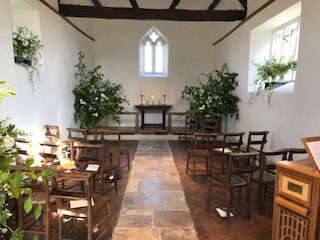
It is a simple rectangular building with no arch or screen dividing the nave and chancel. The small lancet window is the original 13th century and the other windows date form the 15th and 17th centuries. There is a blocked Tudor-arched chamfered priest's door set in the south wall, now blocked up but its outline can be seen from the outside. There have been rumours of a tunnel running from the church towards the Manor Farm House.
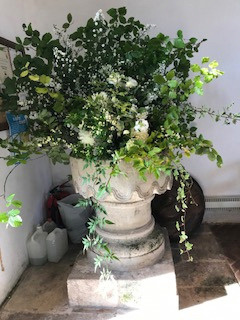
The tile-hung bell tower is a more recent edition dating from 1907 when it was rebuilt. This replaced an earlier turret since 2 bells were recorded as having existed at the time of the Commissioners' inventory in 1553. The font is Norman dating from about 1150, and pre-dates the present building. It is interesting to note that the font bowls in Wiltshire are circular whereas in Gloucestershire and Somerset the bowls of all scalloped fonts are square. In 1829 Sir Richard Colt Hoare wrote in his book The Modern History of Wiltshire "The Church in exterior or interior, has nothing to commend it. The appearance is that of a barn."
Erected in a commanding situation the church overlooks the meadows through which the Ebble continues to wind its way, and on either side of which can be seen earthworks indicating the former extent of the village. Most of the houses were originally on the far side of the Ebble with the main street running down the valley. This is clearly shown by the Historic Monuments Commission Plan of the old village dates 1773.
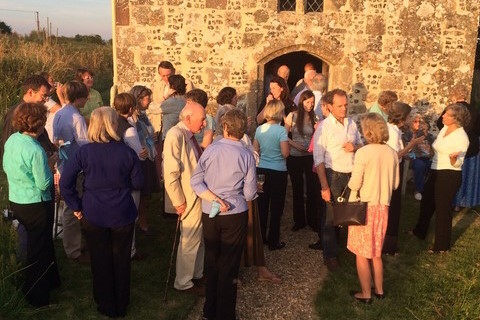
Perhaps its appearance is not very imposing, but as one steps inside the building, there displayed on the chairs are the colourful kneelers worked by members of the congregation at the instigation of the Revd Ronald Broadbent, who inspired them with his own effort, a working of the picture of St Martin as well as the extended kneelers along the altar rail. It is well-loved by the villages that surround it, and although seating only 36 it has seen as many as 65 attending the midnight service of Communion at Christmas. The chalice, still in use at Communion Services, while having no hallmarks does bear an inscription on the bowl which reads Thos. Talk – Churchwarden 1735.
Originally Fifield was an early Iron Age village dating from 500 BC and sited on the higher ground. The number of inhabitants as recorded in the Domesday Book of 1086 numbered 18, but in 1377 a register of Poll Tax Payers shows that 67 men lived here and possibly with their wives and children this number could well have been around 250 persons. However, it is recorded in 1801 that it had fallen to 42, this decline being attributed to three factors, namely the Black Death which affected many communities throughout England, bad harvests due to climatic changes and the breakdown of the Medieval farming system, and over the years the farms and the houses became very neglected and run down until only a few houses remain and the inhabitants number only around 25.
In more recent times, time and traffic stood still in Fifield Bavant when Kiera Knightley and Matthew Macfadyen, joined by a host of paparazzi, filmed the 2005 production of 'Pride and Prejudice'
There is always a constant need to raise money for various expenditure on our three churches for the repairs that have to be carried out on the these old buildings to keep them in a good state to welcome visitors and regularly for worship.

Support St Martins at Fifield Bavant